• Japanese Maple – Laceleaf

    Japanese Maple – Laceleaf

    Laceleaf Japanese maples (Acer palmatum var. dissectum) are prized ornamental trees known for their finely cut, lace-like leaves and naturally weeping growth habit. Their graceful, cascading branches create a striking focal point in garden beds, near patios, around water features, or as specimen plantings.

    These slow-growing deciduous trees typically reach 3 to 6 foot in height and width, making them ideal for smaller gardens and residential landscapes. Their delicate foliage emerges in shades of green, burgundy, or deep red depending on the variety and transforms into brilliant autumn colors before falling for winter.

    Key Characteristics

    Graceful Form: Naturally arching and cascading branches create a soft, elegant silhouette.

    Delicate Foliage: Finely dissected, lace-like leaves provide exceptional texture and visual interest throughout the growing season.

    Seasonal Color: Foliage displays beautiful shades of green, burgundy, red, orange, and crimson, especially during fall.

    Landscape Uses: Perfect as a specimen tree, accent planting, container tree, or focal point in Japanese-style and woodland gardens.

    With their unique form, stunning foliage, and year-round appeal, laceleaf Japanese maples are among the most treasured ornamental trees for adding beauty and character to the landscape.

  • Crabapple

    Crabapple

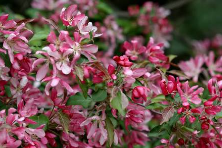
    A favorite for both its spring flowers and its colorful fruit in the fall. The ‘Prairifire’ variety is especially popular.

    A crabapple (genus Malus) is a small-to-medium-sized deciduous tree in the rose family (Rosaceae) that is defined by producing fruit less than 2 inches in diameter. If the fruit grows larger than 2 inches, it is classified as a standard culinary apple (Malus domestica).

    Key Characteristics

    • Appearance & Structure: Most mature varieties grow 10 to 25 feet tall with shapes ranging from upright and rounded to weeping and columnar. Compared to common apple trees, crabapples typically have a stiffer, gnarled, and slightly spiny twig structure.
    • Spring Flowers: Highly prized as ornamentals, they burst into vibrant, fragrant clouds of white, pink, or deep crimson blossoms early every spring.
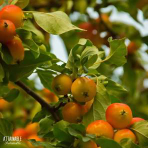
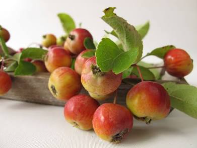
    • The Fruit: The miniature pome fruits resemble tiny apples or cherries and grow in dense clusters. They range in color from bright yellow to deep maroon.

  • Magnolia

    Magnolia

    From the graceful ‘Jane’ to the cold-hardy ‘Little Gem’, these trees bring elegance and glossy green leaves to any setting.

    A magnolia (genus Magnolia) is an ancient, highly prized genus of deciduous and evergreen trees and shrubs famous for their massive, cup-shaped, and deeply fragrant flowers. They belong to the family Magnoliaceae and are among the oldest flowering plants on Earth, having evolved before bees even existed. [1, 2, 3, 4, 5]

    Key Characteristics

    • The Flowers: Large, waxy blossoms that come in shades of white, pink, purple, and yellow. Because they evolved before bees, their flowers do not have true petals; instead, they feature tough, petal-like structures called tepals designed to withstand damage from pollinating beetles.
    • Foliage & Form: Depending on the variety, they can grow as massive, glossy-leaved evergreen trees up to 80 feet tall, or as smaller, multi-stemmed deciduous shrubs.
    • Unique Seed Pods: After flowering, they produce cone-like wooden seed pods. In autumn, these pods split open to reveal bright, exotic-looking red or orange seeds. [1, 2, 3, 4, 5]
  • Dogwood

    Dogwood

    Whether you love the iconic white blooms or choose a pink-flowered variety, Dogwoods are a beloved part of Tennessee’s spring landscape.

    A dogwood (genus Cornus) is a highly popular genus of deciduous trees and shrubs known for their spectacular spring blooms, elegant layered branching, and vibrant autumn color. They belong to the family Cornaceae and are wildly popular in landscaping across North America, Europe, and Asia. [1, 2, 3, 4, 5]

    Key Characteristics

    • The “Flowers”: The iconic, showy “petals” of a dogwood are actually bracts (modified leaves). The true flowers are the tiny, cluster-like green-and-yellow structures hidden right in the very center.
    • Layered Form: Many dogwood trees grow with a distinctive horizontal, tiered branch structure that creates a stunning architectural silhouette in winter.
    • Multi-Season Interest: After the spring blooms fade, they offer lush green summer foliage, followed by bright red autumn berries and fiery purple-red fall leaves. [1, 2, 3, 4, 5]
  • Eastern Redbud

    Eastern Redbud

    An early spring bloomer with brilliant purple-pink flowers — perfect for a splash of color before other plants wake up.

    A flowering redbud (scientific name Cercis canadensis) is a small, deciduous understory tree native to eastern North America, renowned for its spectacular magenta pink flowers that bloom directly on bare branches in early spring. It belongs to the pea family (Fabaceae). [1, 2, 3, 4, 5]

    Key Characteristics

    • Unique Bloom Style: It exhibits cauliflory, meaning the flower clusters burst straight out of the bark of old branches and trunks before any leaves appear.
    • Heart-Shaped Foliage: After blooming, the tree develops distinctively large, heart-shaped leaves. These leaves turn a soft, pleasing yellow color in autumn.
    • Seed Pods: In late summer, the flowers give way to clusters of flat, brown, bean-like seed pods that hang from the branches through winter.
    • Size: It grows quickly to a modest 20 to 30 feet tall with a rounded, multi-trunked silhouette. [1, 2, 3, 4, 5]
  • Crape Myrtle

    Crape Myrtle

    These Southern staples come in many varieties, including the popular ‘Natchez,’ and bloom throughout summer with vibrant pinks, purples, and whites.

    A crape myrtle (genus Lagerstroemia) is a genus of deciduous and evergreen trees and shrubs celebrated for their massive, crinkled summer flowers, peeling ornamental bark, and intense autumn color. Often called the “Lilac of the South,” they are native to Asia and Australia but are widely planted globally for their exceptional heat tolerance and long blooming seasons. [1, 2, 3, 4, 5]

    Key Characteristics

    • The Flowers: Large, dense flower clusters (panicles) bloom at the tips of new growth from mid-summer into autumn. The individual petals have a delicate, crinkled texture that looks exactly like crepe paper. They come in vibrant shades of pink, red, purple, and white.
    • Exfoliating Bark: As the tree matures, the outer gray bark peels away in smooth flakes to reveal a striking, polished under-bark in shades of cinnamon, pink, or rich amber. This provides exceptional winter visual interest.
    • Size Versatility: Cultivars vary dramatically in size. They range from tiny, 2-foot dwarf shrubs up to stately, multi-trunked canopy trees growing over 30 feet tall. [1, 2, 3, 4, 5]

    Growing Conditions

    • Climate: They thrive in USDA Hardiness Zones 6 to 10. They are exceptionally drought-tolerant and love intense summer heat, which actually stimulates heavier blooming.
    • Sunlight: They require full sun (at least 6 hours of direct sunlight daily). Shady spots reduce flower production and make the plant highly susceptible to powdery mildew.
    • Soil: They are highly adaptable to most soil types, including clay, provided the area is well-draining. They prefer a slightly acidic to neutral pH. [1, 2, 3, 4, 5]

    Varieties and Purchasing

    Crape myrtles are widely available in diverse sizes and color palettes from major nurseries: [1, 2, 3]

    • Tree Types (15–30+ ft): Classic varieties like ‘Natchez’ (pure white flowers with dark cinnamon bark) or ‘Tuscarora’ (vibrant coral-pink) make spectacular front-yard focal points.
    • Semi-Dwarf & Dwarf Types (2–10 ft): Compact cultivars like the Black Diamond series (striking near-black foliage paired with bright red or purple flowers) are excellent for borders, foundations, or container planting. [1, 2, 3, 4, 5]